
The policy question has changed
On September 8, 1978, the Galápagos Islands entered the first generation of UNESCO’s World Heritage List and retain property file No. 1. Forty-eight years later, the archipelago no longer needs to prove its global appeal. The challenge is to manage a level of demand that must finance conservation without overwhelming the ecological and social systems that make the destination valuable.
UNESCO’s message: zero growth is not anti-tourism
In its 2025 decision, the World Heritage Committee described zero tourism growth as the optimal scenario for the long-term protection of Galápagos’ Outstanding Universal Value and noted that limits on visitor numbers and flight frequencies may become necessary.
This reframes tourism policy. If physical volume cannot expand indefinitely, growth must come from productivity: higher local spending, longer stays, better jobs, stronger local supply chains, better visitor management and a lower environmental footprint per visitor-night.
290,404 visitors in 2025
The official 2025 visitor report recorded 290,404 tourist arrivals, up 4% from 2024. Sixty-two percent were international visitors and 38% domestic. Those figures matter economically, but in a World Heritage island system they must be interpreted together with pressure on water, energy, waste, logistics, biosecurity and visitor sites.
A better definition of tourism success
For a destination with strict ecological limits, arrivals alone are a weak performance indicator. A more useful dashboard would include local net spending per visitor, average length of stay, local procurement, resource use per visitor-night, visitor-site pressure, conservation revenue, benefit distribution and the condition of the attributes that support Outstanding Universal Value.
Pricing can support a high-value model
Since August 2024, most international visitors over age 12 pay a USD 200 protected-area entrance fee. The 2025 official report did not identify a demand decline attributable to the increase and describes Galápagos as consolidating a high-value positioning. That suggests the archipelago does not need to compete on low price.
The policy challenge is traceability: how much revenue is collected, how it is distributed, what conservation outcomes it finances and how local residents perceive the benefits.
Carrying capacity is larger than a trail
Tourism pressure is not limited to how many people stand at a wildlife site. Each arrival activates flights, boats, food imports, water, energy, waste, construction and labor mobility. In an island system, indirect logistics may matter as much as direct visitor contact with nature.
That is why carrying capacity should be understood as the ability of the entire socio-ecological system to absorb tourism demand without degrading biodiversity, public services or resident wellbeing.
Inclusive tourism belongs in a high-value strategy
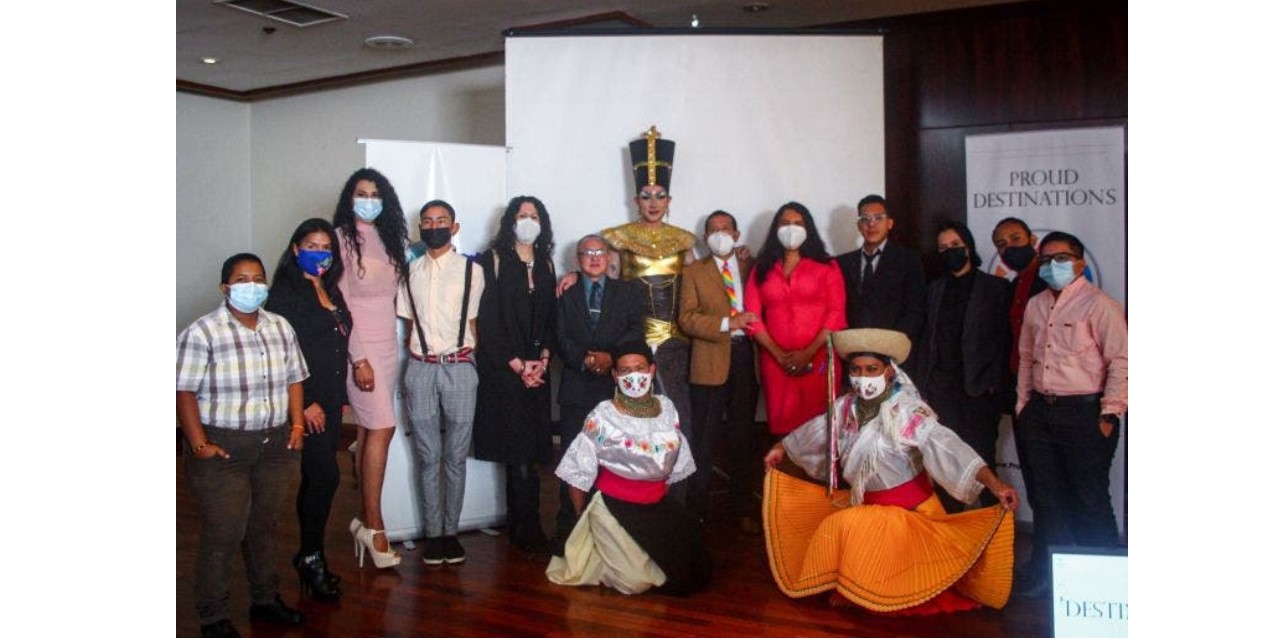
Specialized segments, including LGBTQ+ tourism, can support a high-value model when they compete on service quality, safety, longer stays, local spending and responsible behavior rather than mass volume. Inclusion and conservation are not competing goals.
Future competitiveness will likely depend less on adding physical capacity and more on better talent, multilingual service, accessibility, digitalization, local purchasing, interpretation and science-based visitor experiences.
Seven indicators for the next phase
- Local net spending per visitor.
- Average stay and dispersion of spending.
- Water, energy, waste and import footprint per visitor-night.
- Pressure and recovery at visitor sites.
- Effective contribution to conservation.
- Distribution of benefits across local households and businesses.
- Status of the attributes that sustain Outstanding Universal Value.
Conclusion
Galápagos does not need to become less successful. It needs a more mature definition of success. Zero growth in volume can coexist with economic growth in quality, productivity and local value capture. The goal is not to receive fewer benefits; it is to avoid buying those benefits by consuming the natural capital on which the destination depends.
Good tourism governance in Galápagos means every visitor should leave more value than they extract and less pressure than the ecosystem can absorb.
Selected sources
- UNESCO World Heritage Centre, Galápagos Islands.
- World Heritage Committee Decision 47 COM 7B.36 (2025).
- Galápagos National Park / Tourism Observatory, 2025 Annual Visitor Report.
- Galápagos protected-area entrance fee guidance.
- Galápagos Blue Economy Action Plan, 2025.
 Abg. Psic. Diane Rodríguez, Mgs. Consultora de Derechos Humanos y Salud Mental
Un comentario Agrega el tuyo